
 Call 01332 492092 - Email: info@shawelectrical.net - mobile/whatsapp - 07708 972957
Electric Vehicle (EV)Charging Installers Based in Ilkeston Derbyshire.
If your new to the world of electric vehicles it can be a bit of a minefield understanding how charging works at home or on the move using public chargers but I'll try to make things clear to understand.
Most modern EVs have whats called a CCS2 charge port which is a duel input power port for DC (direct current fast charging up to 100kw) and AC charging.
When you charge at home is uses AC power up to 7.4 kw and this is the top section of your charging port and is known as a type 2 or Mennekes type plug.
When you charge at the side of the road you can normally fast charge up to 100kw which takes less than a hour for a full charge, this is known as a CCS2 port.
You can get the type 2 chargers normally at supermarkets or retail outlets but these only slow charge and can take hours.
Home charging is normally done overnight and costs just a few pounds for a full charge giving a range of 150 plus miles on smaller battery models or 300 plus miles on bigger battery models.
Switching to an EV saves huge amounts of money and gives independence away from fossil fuels and a cleaner air quality.
As Diesel and Petrol prices continue to soar it makes sense to charge at home saving £1000s each year on fuel duty and then when you take into account that EVs require hardly any servicing the cost of ownership is very minimal .
All Our Chargers are compatible with Solar PV Installations
Evec chargers can connect to your solar PV system and measure the usage of energy and how much solar energy is being used by your charger. if you couple this with home battery system you can charge batteries during the day from free solar energy and if you select a EV tarrif you can charge you car and storage batteries from cheap rate night tarrif.
Chargers from EVEC are designed to charge overnight at cheap rate electricity.

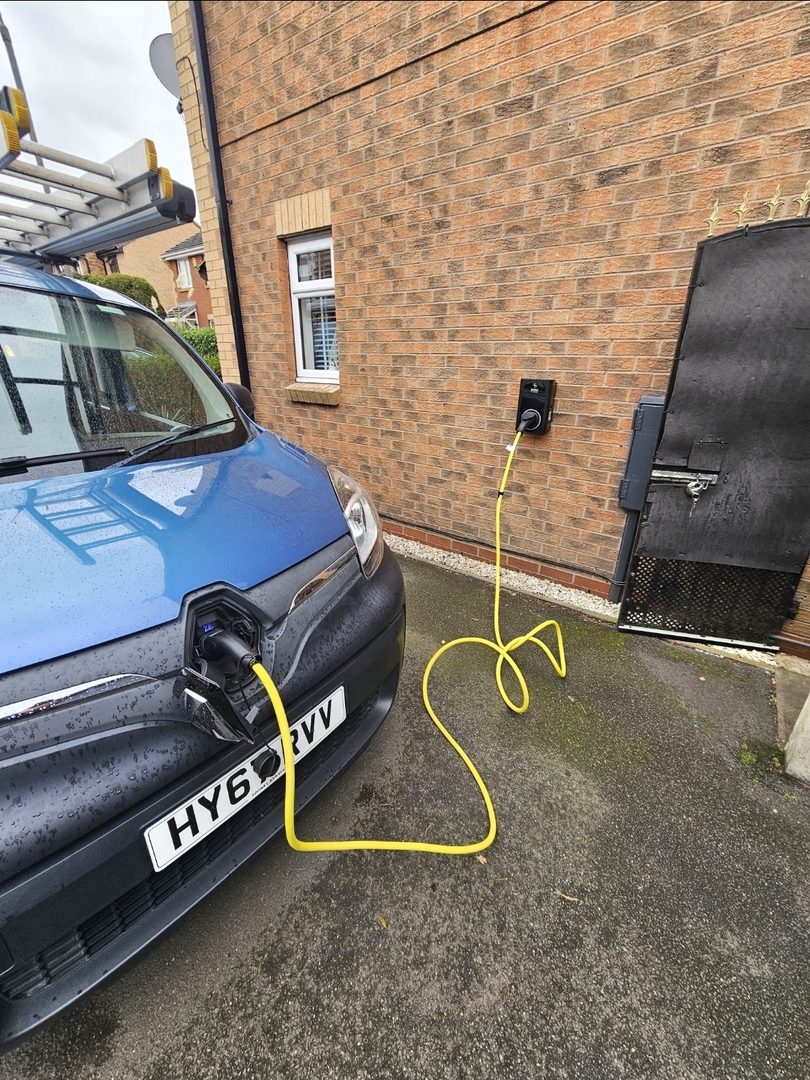
This EVEC Charger is capable of charging electric cars and vans up to 7.4 kw per hour.
Above we have a charger we installed recently which can be either controlled by the free EVEC app or set to manual mode to suit your needs.
The smart phone controlled app from Evec.

With the Evec app you can see on your phone your charge rate, schedule charging times and lots more.
Already Got Your Own Charger ?
When you purchase your EV some car dealers will give you a charger as part of the deal. We are happy to fit your own charger.
We will need to check your consumer unit has the correct type of RCD and a spare suitable way. If this isn't the case we upgrade your consumer unit at the same time at a discounted rate if we are installing a new charger for you at the same time.
Fixed Price EV Charger Installation from £695 Fully Fitted and commisioned (Subject to Distance from Consumer Unit)

This is a Evec 7.2kw charger we fitted recently that was a difficult installation as it was a new build house with the consumer unit in the middle of the property so getting a cable to the charger was a challenge but we managed it.
Do I have the right type of consumer unit to power a EV charger ?
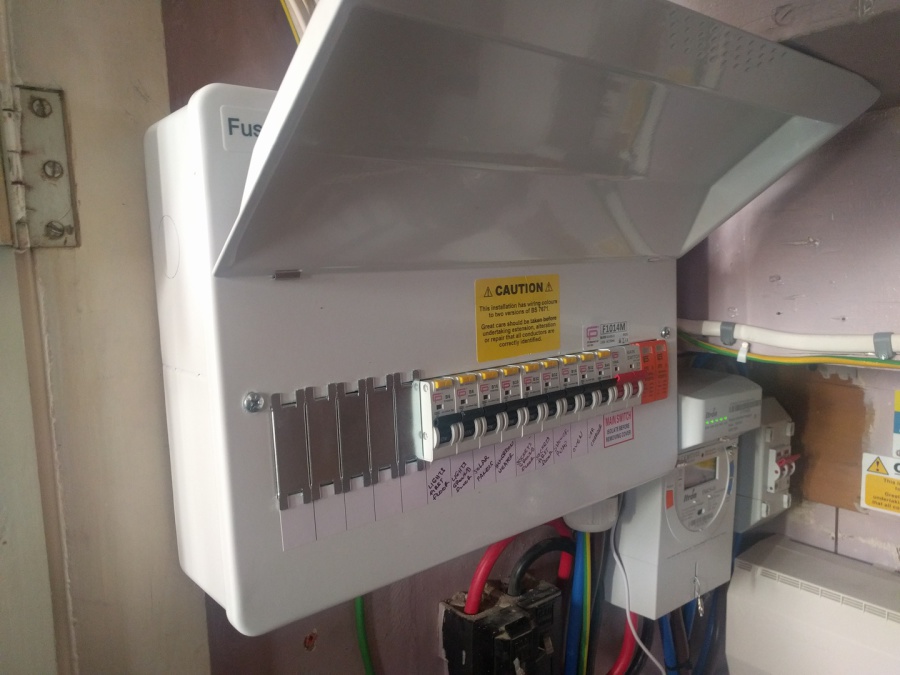
A factor to take into account is that you may need a consumer unit upgrade as you must have a type A rcd safety device to work with a EV charger and many older consumer units won't have this- we can upgrade your consumer unit if required. In some instances we add a seperate dedicated EV charger consumer unit with the correct type of RCD and surge protection.
Give us a call on 01332 492092 or Text/WhatsApp on 07708 972957 to book in a survey of your property for the installation of a home charging station.
 Print
Sitemap
Print
Sitemap
Shaw Electrical & Security Serving Derbyshire & Nottinghamshire. Registered Office - Derbyshire Avenue West Hallam Ilkeston, Derbyshire DE7 6HJ Nottingham Office 0115 7722425 or our Derby Office on 01332 492092 © Shaw Electrical & Security Email: info@shawelectrical.net Whatsapp: 07708972957.
